
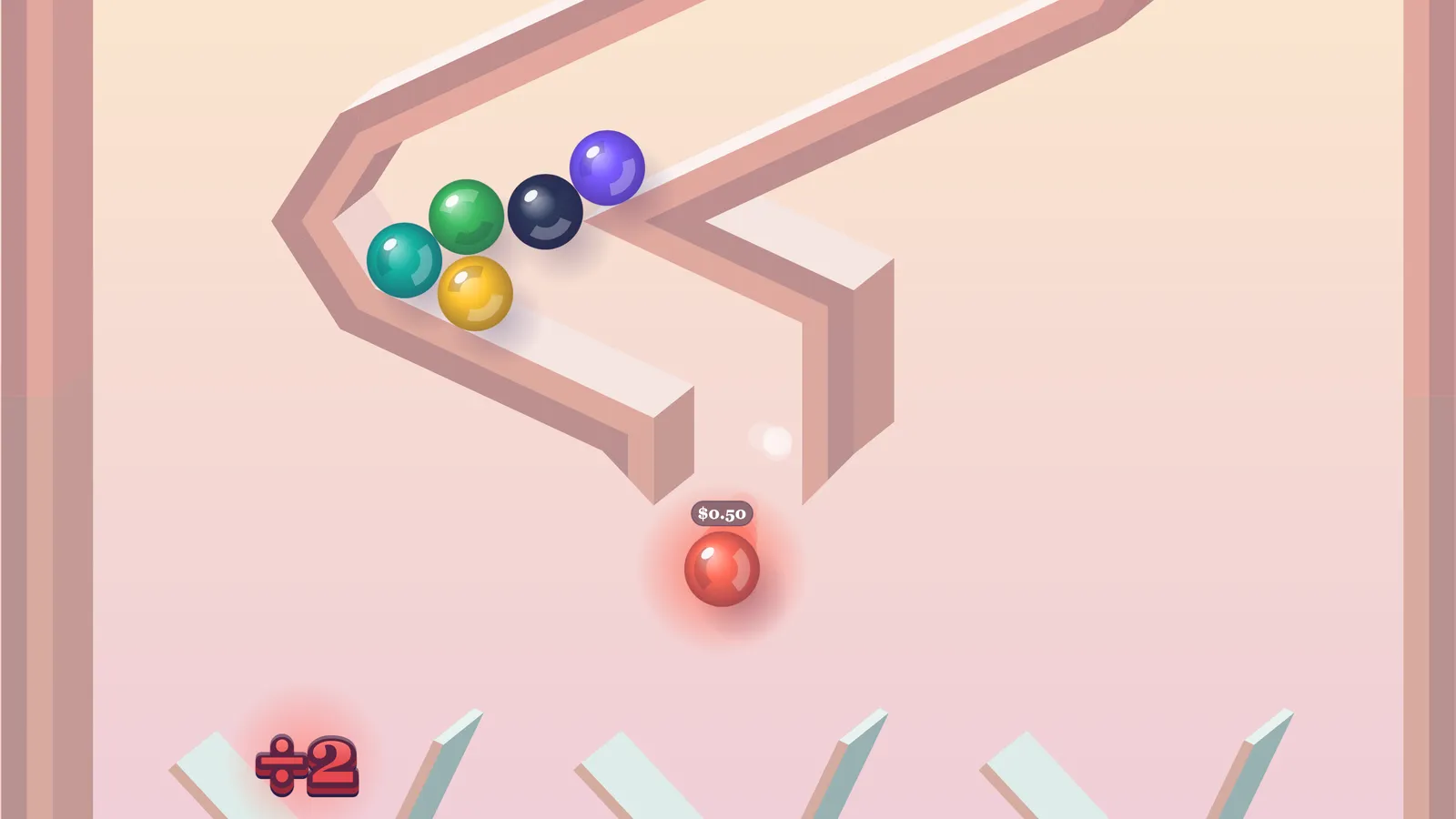
Faking 3D With 2D Lines: How Marble Derby Draws Its Board From the Physics
Marble Derby's physics knows only discs and zero-thickness lines. How we turn those lines into solid-looking slabs without ever drawing a marble inside a wall.
Six marbles race down a tower of ramps, bowls and pegs. Back one, and its place times its multiplier is your win.

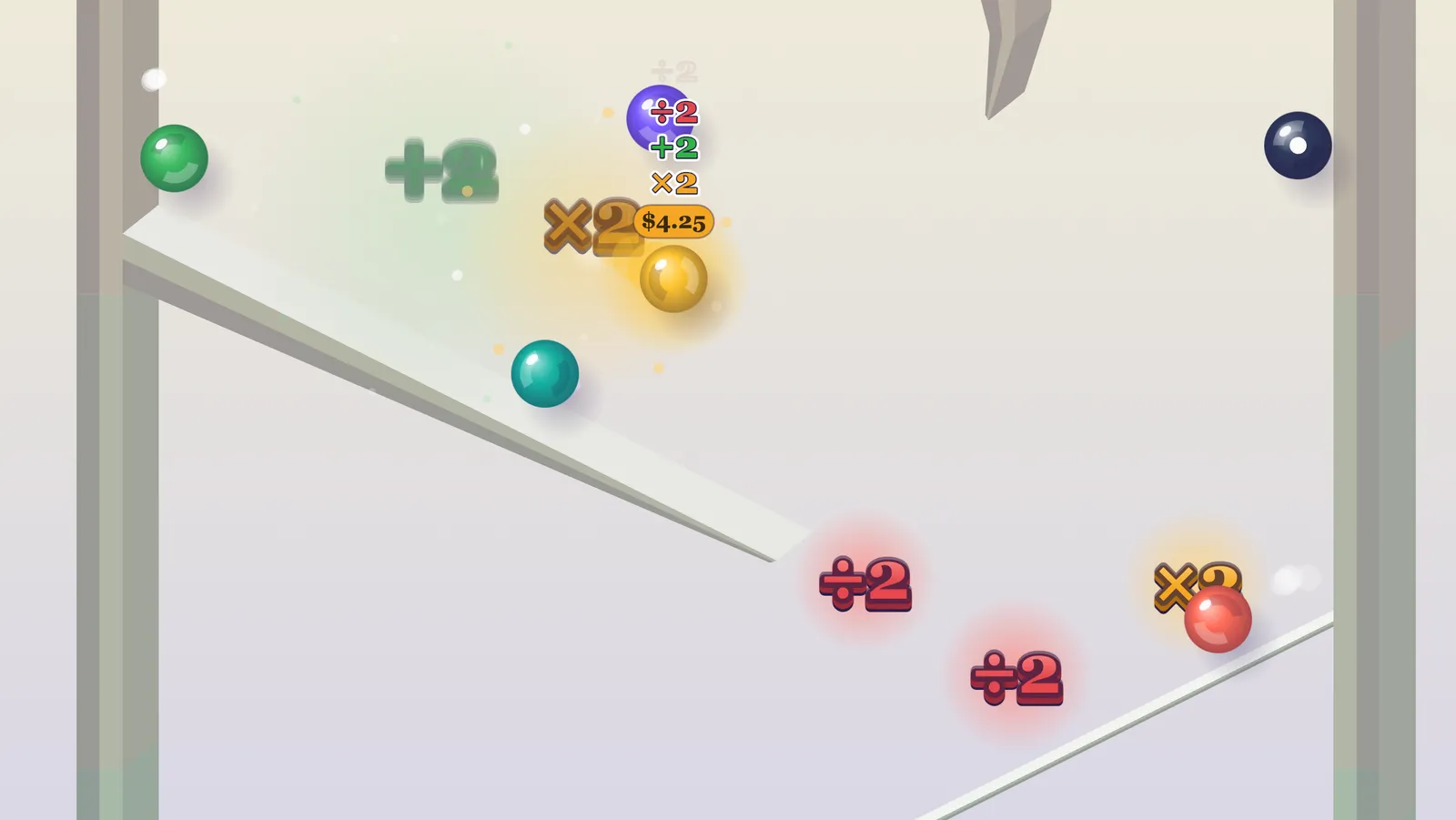
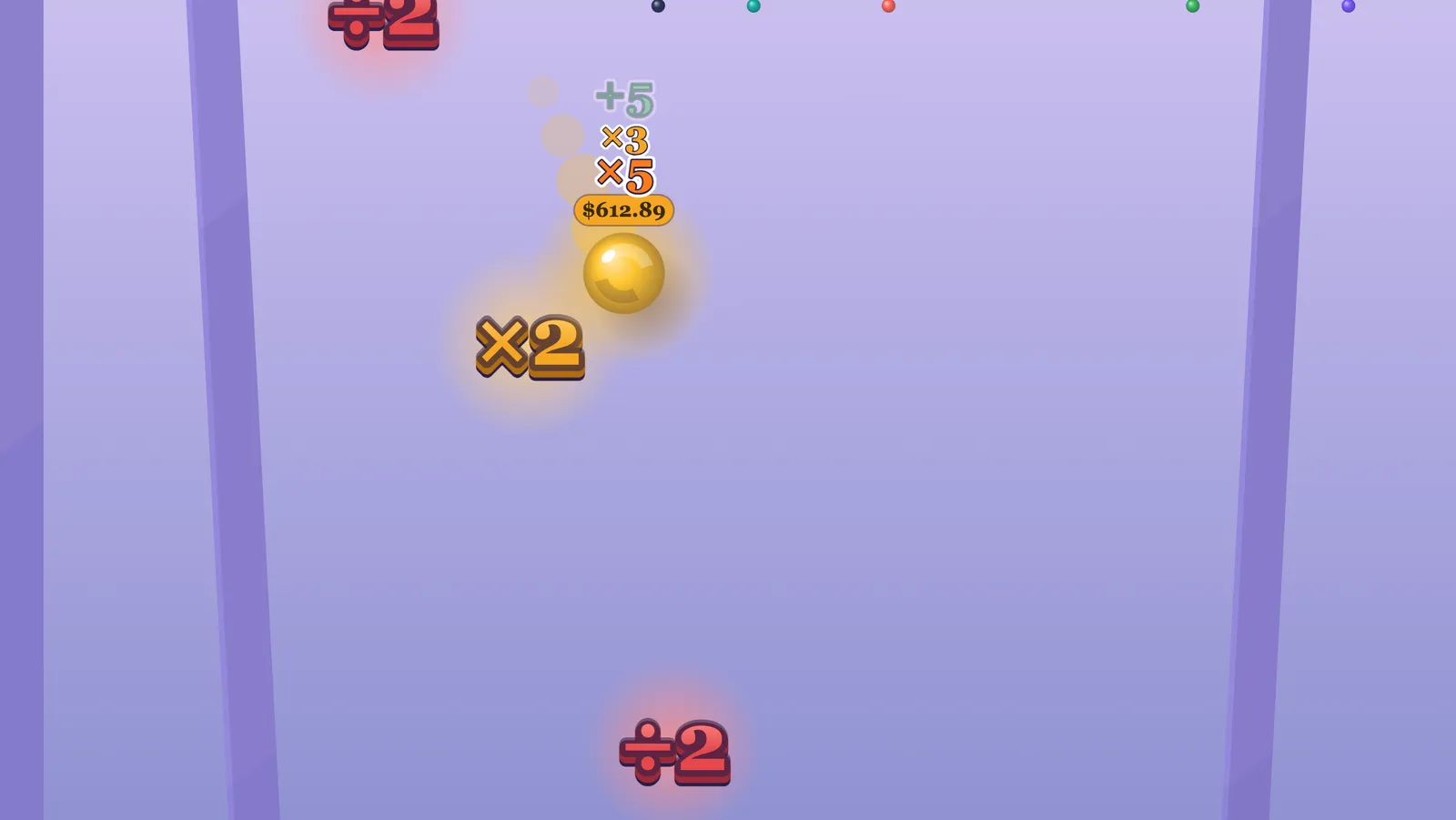
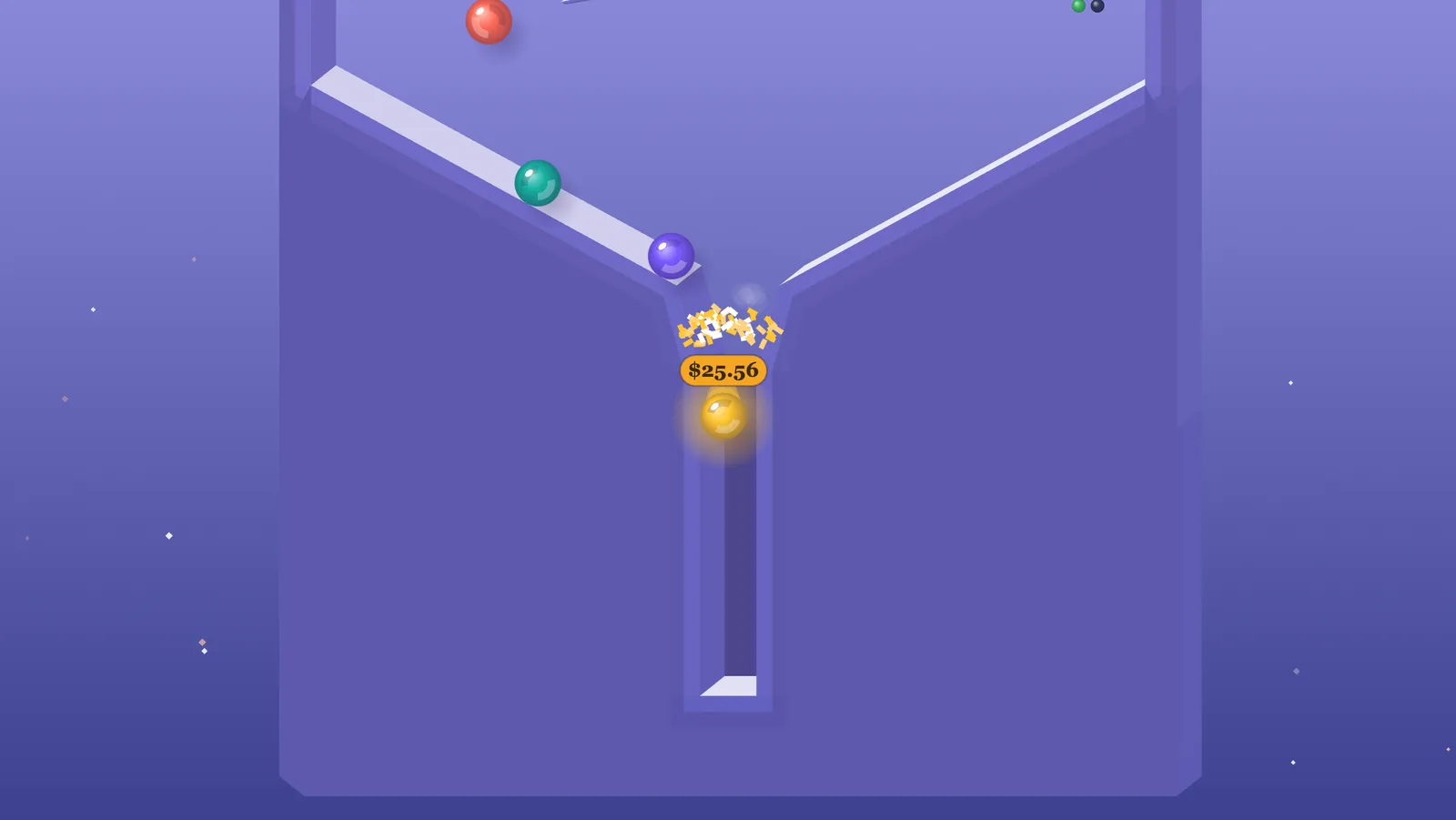

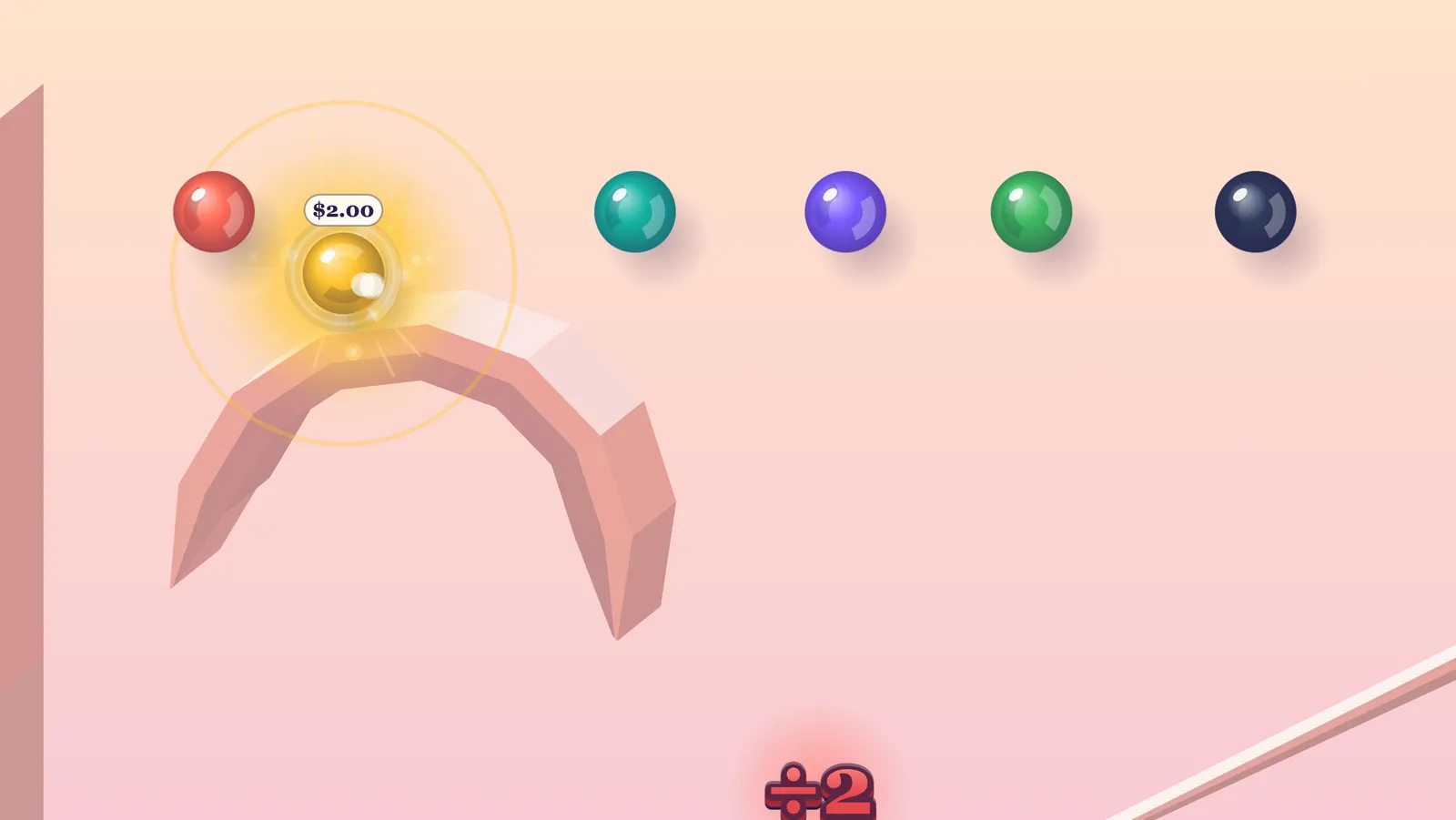

Six glass marbles line up at the top of a tall tower of ramps, bowls and pegs, and one of them is yours. The board is built fresh for every race, and each marble always starts from its own lane, so no two lanes run quite the same. Pick the colour you like.
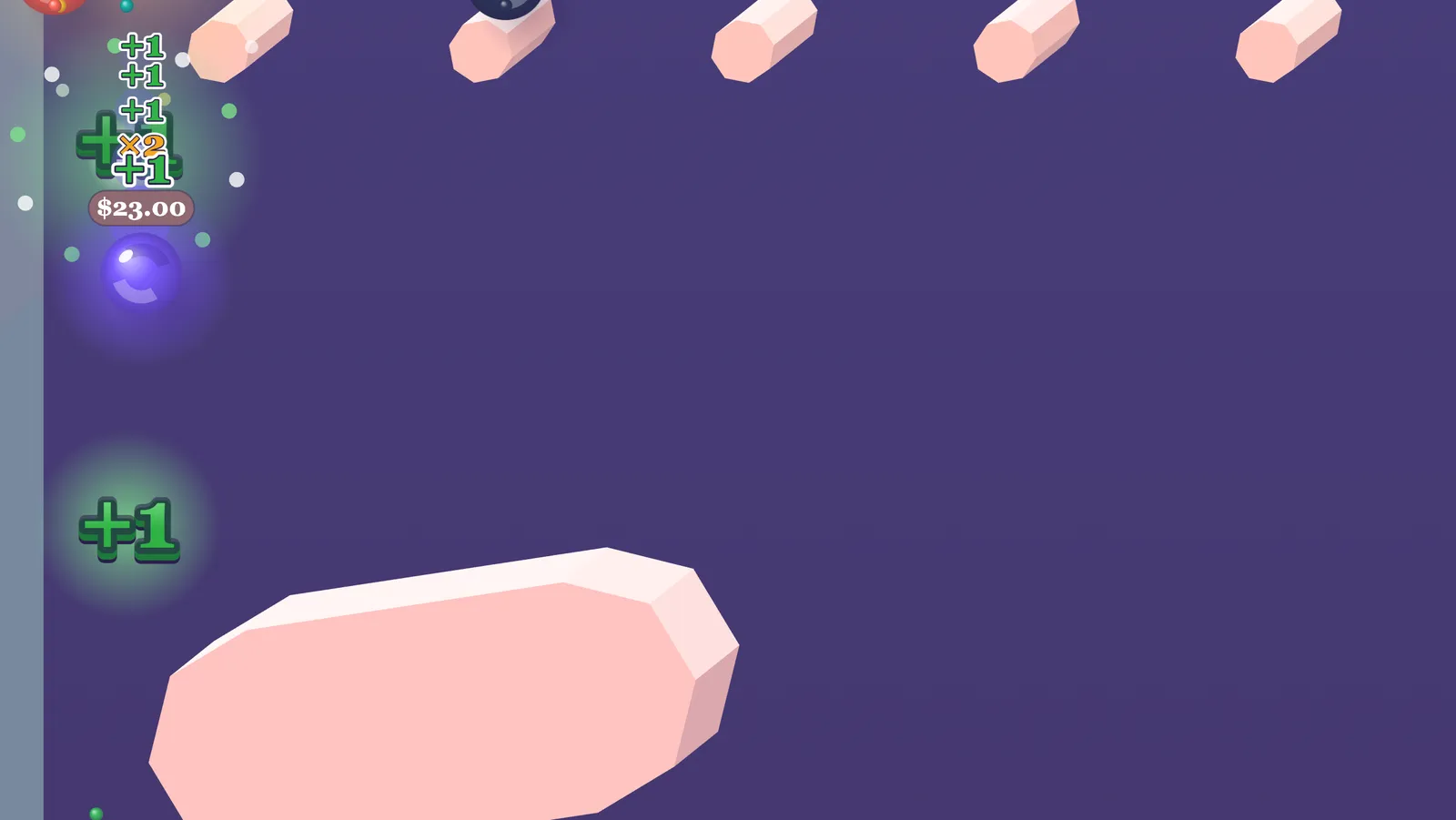
On the way down, glowing pickups change your marble’s multiplier the moment it touches them, in the order it touches them: +1 to +10 add to it, ×2 to ×5 multiply it, and ÷2 halves it. Pickups are shared, so every marble can collect every one, and they stop counting once a marble reaches the funnel. The last stretch of the board often decides the result.
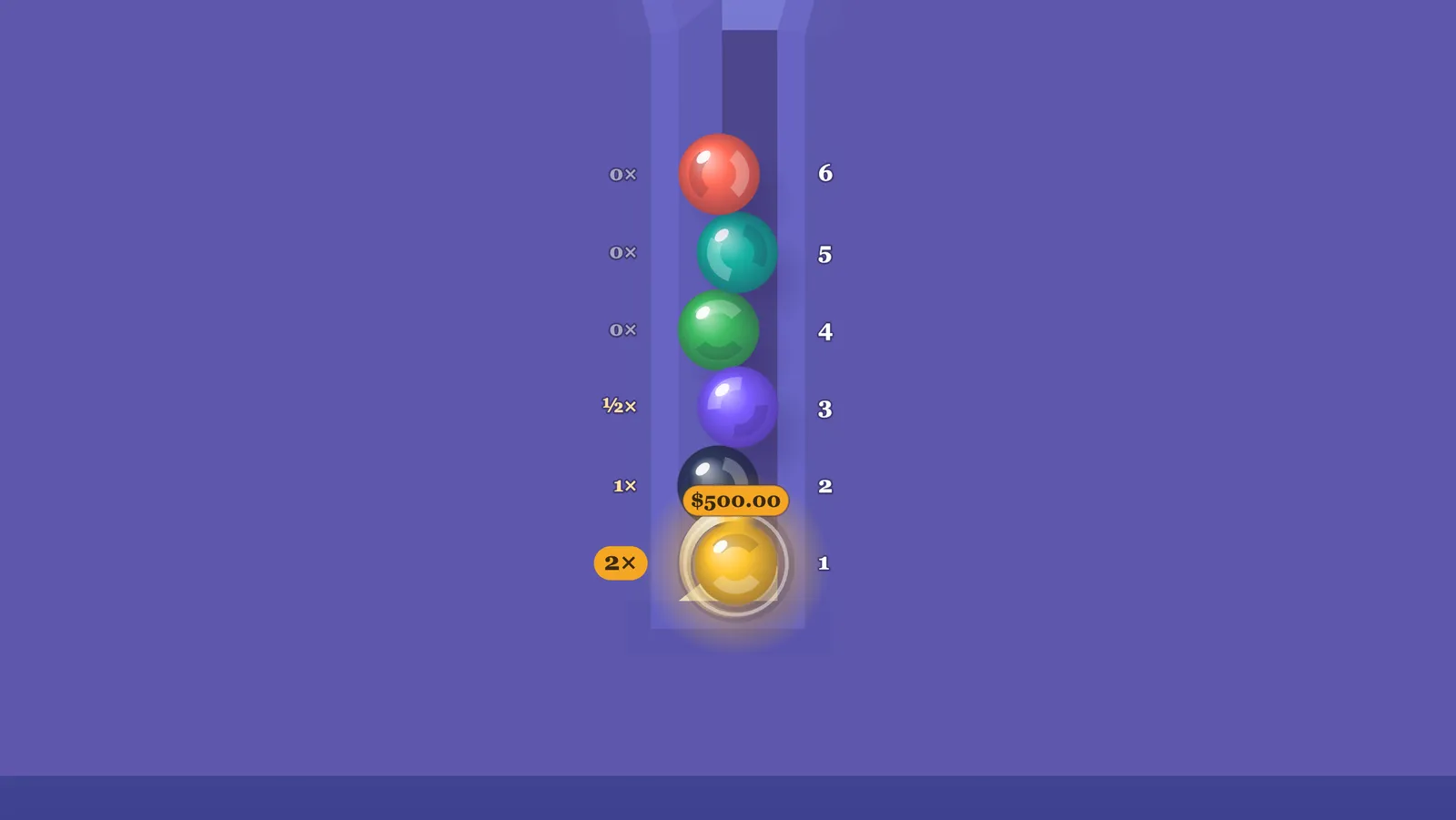
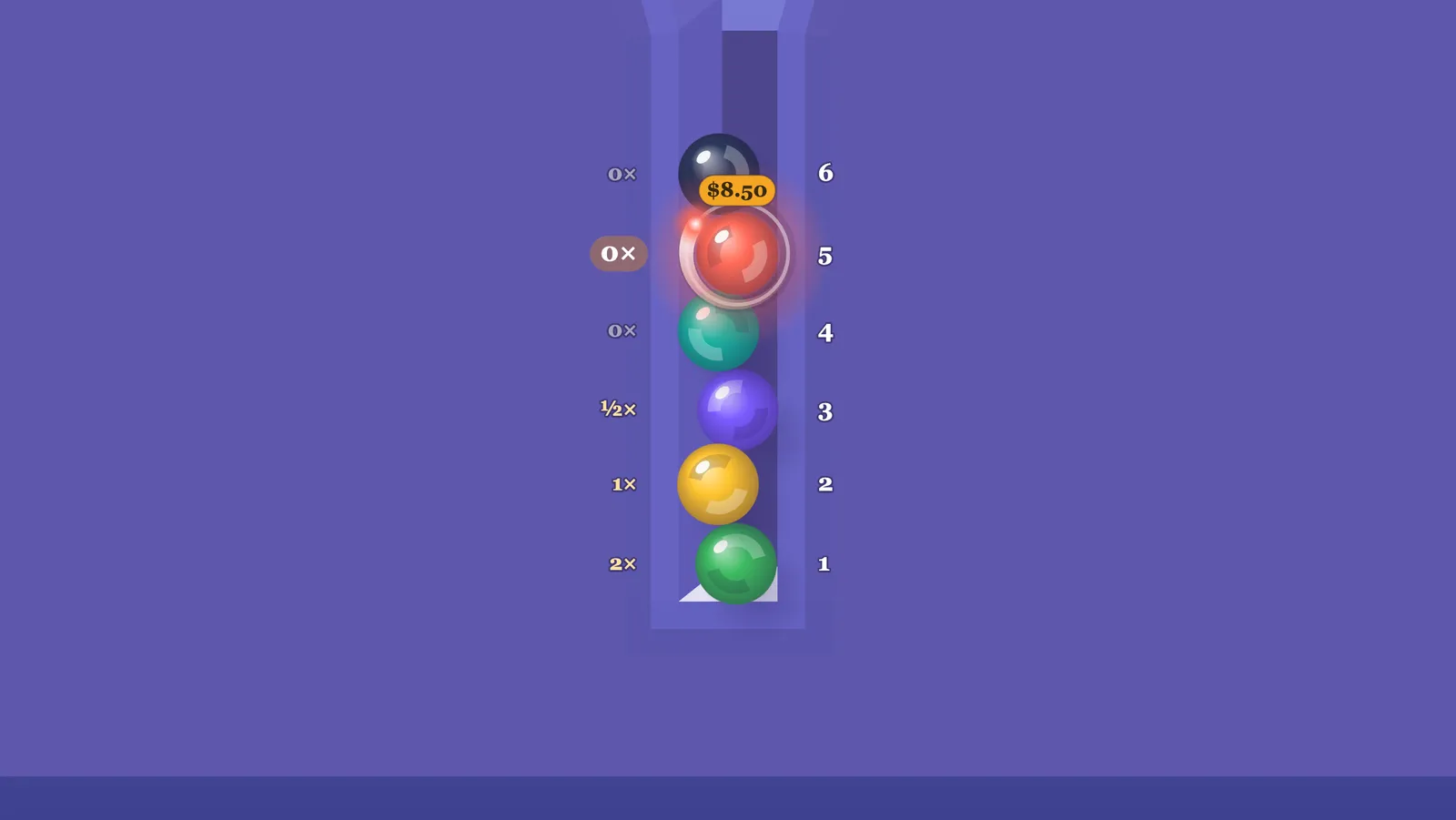
At the bottom, every marble drops into a single-file funnel, and the order they settle in is the finishing order. 1st place pays 2× its multiplier, 2nd pays 1×, 3rd pays ½×, and 4th to 6th pay nothing. A close finish for a paying place plays out in slow motion.
Every race is a real physics simulation, decided before it starts and rebuilt from the round’s seed in your browser. You don’t steer your marble. You watch it race.
Every mode has a maximum win of 1,000× the bet amount.
Marble Derby's physics knows only discs and zero-thickness lines. How we turn those lines into solid-looking slabs without ever drawing a marble inside a wall.
Marble Derby pays from a pre-computed book, yet every race is a real physics simulation, re-run from a single seed in the player's browser. Here is how we keep it identical.